After an injury, surgery, stroke, or as people age, many people are faced with the question: which is better - a wheelchair or a walker for mobility? Both rehabilitation devices help maintain mobility, but have different purposes and levels of support.
To make the right choice, it is important to understand how each of these medical devices works, in which cases they are recommended, and what to look for before buying.
When should you use a wheelchair?
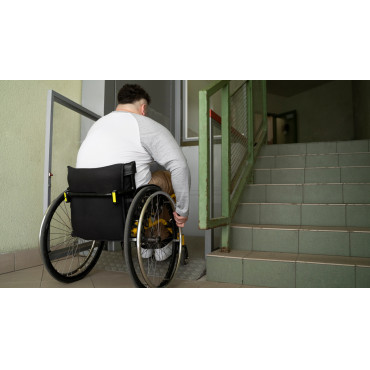
A wheelchair (or wheelchair) - is a means of transportation for people who cannot walk independently or have significant mobility limitations. Most often, doctors and rehabilitation specialists advise using a wheelchair in the following cases:
- complete or partial loss of function of the lower extremities,
- paralysis after a stroke,
- spinal injuries,
- fractures with a long period of immobilization,
- amputations of the lower extremities,
- severe neurological diseases,
- oncological conditions with pronounced weakness.
In such cases, a wheelchair provides full support and relieves the load from the legs. The user can move independently (mechanical models with large wheels), with the help of an accompanying person or with the help of an electric drive (electric wheelchair).
.jpg)
A wheelchair does not require load on the legs — This is important if the doctor forbids support or the person is physically unable to stand or walk even a few steps. A wheelchair will also be appropriate in a situation where the patient needs mobility on the street to independently cover certain distances. During the rehabilitation period, which involves a long recovery period, it is also worth buying a wheelchair.
It is also worth buying a wheelchair in cases where it is important to preserve the patient's energy — for example, with oncology or severe chronic diseases.
When are walkers used for mobility?
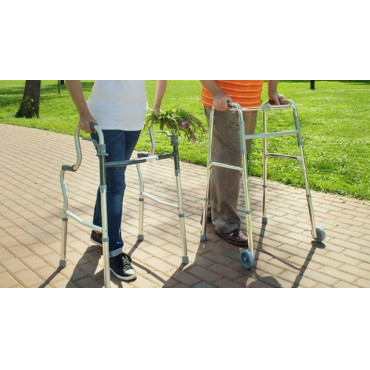
Walkers for mobility — are aids that support a person while walking. Unlike a stroller, they do not replace movement, but help to carry it out.
Indications for the use of walkers:
- period after hip or knee joint surgery,
- recovery after fractures,
- early rehabilitation after a stroke,
- impaired coordination,
- muscle weakness,
- age-related decrease in stability.
Walkers allow you to partially transfer body weight to your arms and reduce the load on your legs.
.jpg)
Is it worth buying a walker for the elderly?
Walkers for the elderly are often the optimal solution for:
- dizziness,
- unsteadiness of gait,
- fear of falling,
- arthrosis,
- early stages of neurological disorders
They give a feeling of stability and confidence. A person continues to walk, which is very important for maintaining muscle tone and preventing complications.
Walkers for the disabled: features
Walkers for the disabled can be:
- stationary (without wheels),
- with front wheels,
- rollators (with four wheels and a seat).
The choice depends on the level of control over the body. If coordination is severely impaired — a model without wheels is better. If mobility on the street is needed — rollators are suitable.
Buying a walker is advisable when a person is able to stand and take steps, but needs additional support.

Is it possible to combine the use of a wheelchair and a walker?
In many cases, combined use is possible as follows:
- at home — walker for walking training,
- on the street or for long distances — wheelchair
This approach is often recommended by rehabilitation doctors in order to maintain activity and at the same time avoid overfatigue
The choice between mobility aids depends on the person's condition, diagnosis and doctor's recommendations. Wheelchair — This is a solution for significant or complete mobility limitations, when independent walking is impossible or dangerous.
Walkers for mobility, in particular walkers for the elderly and walkers for the disabled, are suitable for those who have retained the ability to stand and move, but need stable support.
Before buying a wheelchair or walker, it is important to take into account the patient's physical condition, weight and height, conditions of use (apartment or street) and doctor's recommendations.
A properly selected means of transportation is not only comfort, but also safety, prevention of complications and the ability to maintain quality of life.