Hip replacement is one of the most effective orthopedic surgeries that can relieve chronic pain and restore mobility. However, the surgery itself is only the first stage. Subsequent rehabilitation after hip replacement determines how quickly and safely the patient will return to an active life.
One of the most common questions after surgery is: when can you sit on a chair after hip replacement and how to do it correctly so as not to harm yourself. Incorrect sitting in the first weeks is one of the common causes of complications, including dislocation of the artificial joint.
When is it allowed to sit after surgery
Standard clinical protocols state that sitting is allowed as early as 2-3 days after hip replacement, and sometimes even on the first day, but only under the supervision of medical personnel. This does not mean that the patient can sit down arbitrarily or use any furniture.
In the first 6-8 weeks after the operation, the tissues around the endoprosthesis are not yet stabilized, and the muscles are weakened. It is during this period that any incorrect body position can lead to joint displacement or the appearance of sharp pain.
Therefore, there is one rule here: you can sit down, but only correctly and with clear restrictions.

What should a chair be like after hip replacement
A correctly selected chair is not a matter of comfort, but an element of safety. During the rehabilitation period after hip replacement, it is allowed to sit only on surfaces that do not create excessive bending in the hip joint.
Recommended chair:
- has sufficient height so that the angle in the hip joint is at least 90°,
- is equipped with a hard seat,
- preferably has armrests for support when sitting and standing.
Low sofas, soft chairs and stools create a dangerous load on the joint, so in the first weeks after surgery they should be completely excluded.
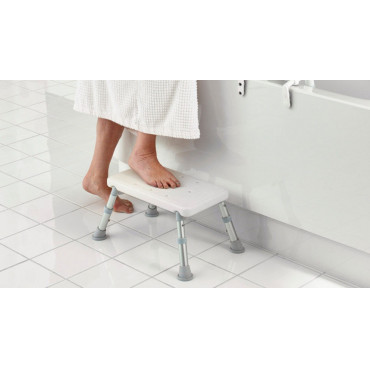
It is for this reason that doctors often recommend using a toilet seat, which increases the height of the seat, creates the correct angle and significantly reduces the risk of incorrect bending legs.
How to sit properly after hip replacement
Sitting technique is crucial. Even with the right chair, sudden or uncontrolled movements can cause pain or complications.
Basic principles of proper sitting:
- the operated leg is slightly forward,
- the knees do not rise above the level of the pelvis,
- the body is kept straight, without a deep forward bend.
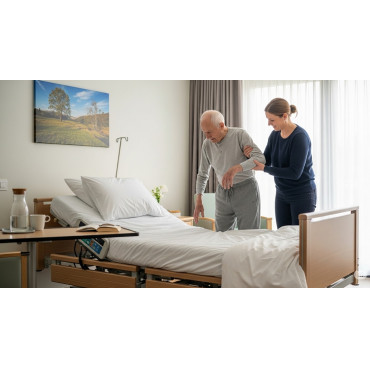
Before sitting, you need to feel the edge of the chair with the back of your legs, transfer your body weight to your hands and slowly lower yourself down. Rushing through this process is one of the most common mistakes.
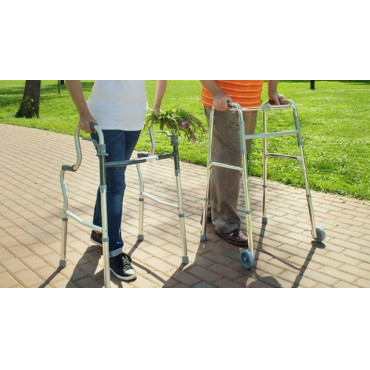
For additional stability and to reduce the fear of falling, it is recommended to use an adult walker or a walking cane, especially in the first weeks after surgery.
What not to do when sitting and standing
After hip replacement, there are movements that remain prohibited for several months. Their violation often causes complications.
The most common prohibitions:
- crossing the legs in any position,
- suddenly standing up without support,
- deep forward bends while sitting,
- torsions with fixed legs.
These restrictions seem insignificant, but they directly affect the stability of the prosthesis. Over time, with your doctor's permission, most movements gradually return, but there's no need to rush.

Pain after hip replacement: what's normal
Pain after hip replacement is an expected occurrence, especially in the first weeks of rehabilitation. It most often occurs when getting up, sitting down, or after prolonged activity.
Normally, the pain is of moderate intensity, gradually decreasing with each week, and is well controlled with medication and rest.
If the pain becomes severe, does not decrease, or is accompanied by a feeling of instability in the joint, this is a reason to consult a doctor immediately. Ignoring such symptoms can complicate further rehabilitation.
How to organize your daily life after hip replacement surgery
Life after hip replacement surgery requires temporary changes in daily habits. The main task is to minimize the risk of dangerous movements and falls.
To do this, it is recommended:
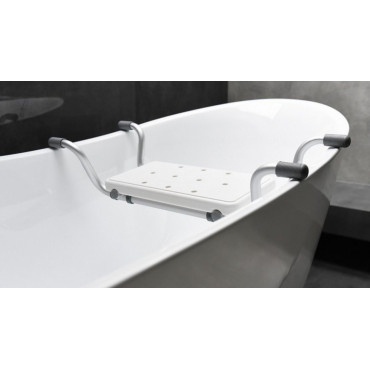
- raise the level of the toilet and bathroom seat by using toilet bowl seats;
- use auxiliary supports when walking (walkers or canes);
- remove slippery rugs and thresholds from the house.
Such simple changes greatly facilitate daily life and reduce the psychological stress that patients often experience after surgery. Properly selected assistive devices — an important part of successful recovery. They not only increase safety, but also allow the patient to be more independent.
In our online medical equipment store MED1 you can find everything you need for rehabilitation after hip replacement: toilet seats, toilet chairs, canes, adult walkers and other products for daily comfort. Using such medical equipment helps reduce the load on the joint and accelerates the return to active life.