Contrary to popular belief, walkers are not just a means of mobility for the elderly. They may be needed by an adult after surgery, injury, a broken leg, hip or knee replacement, stroke, or during recovery from an illness. The key task of this medical device is to provide additional support, help maintain balance, and reduce the load on the legs.
To buy a walker for adults correctly, you need to pay attention to several key points: the walker must match the person's physical condition, height, weight, and conditions of use. Let's consider 7 criteria that should be considered before buying.
1. Health status and level of support
First of all, you need to determine why the person needs a walker. If they lose their balance a little, but stand and walk confidently, a simple model may be enough. If you have difficulty moving around on your own, your legs are weak, or you need to partially relieve your limb, it is better to consider a more stable design.
Walkers are often used temporarily after surgery or injury — until you regain strength and confidence when walking. For example, after a hip replacement, they can help you move more safely in the early stages of rehabilitation. In this case, the level of load on the leg should be determined by a doctor or physical therapist.
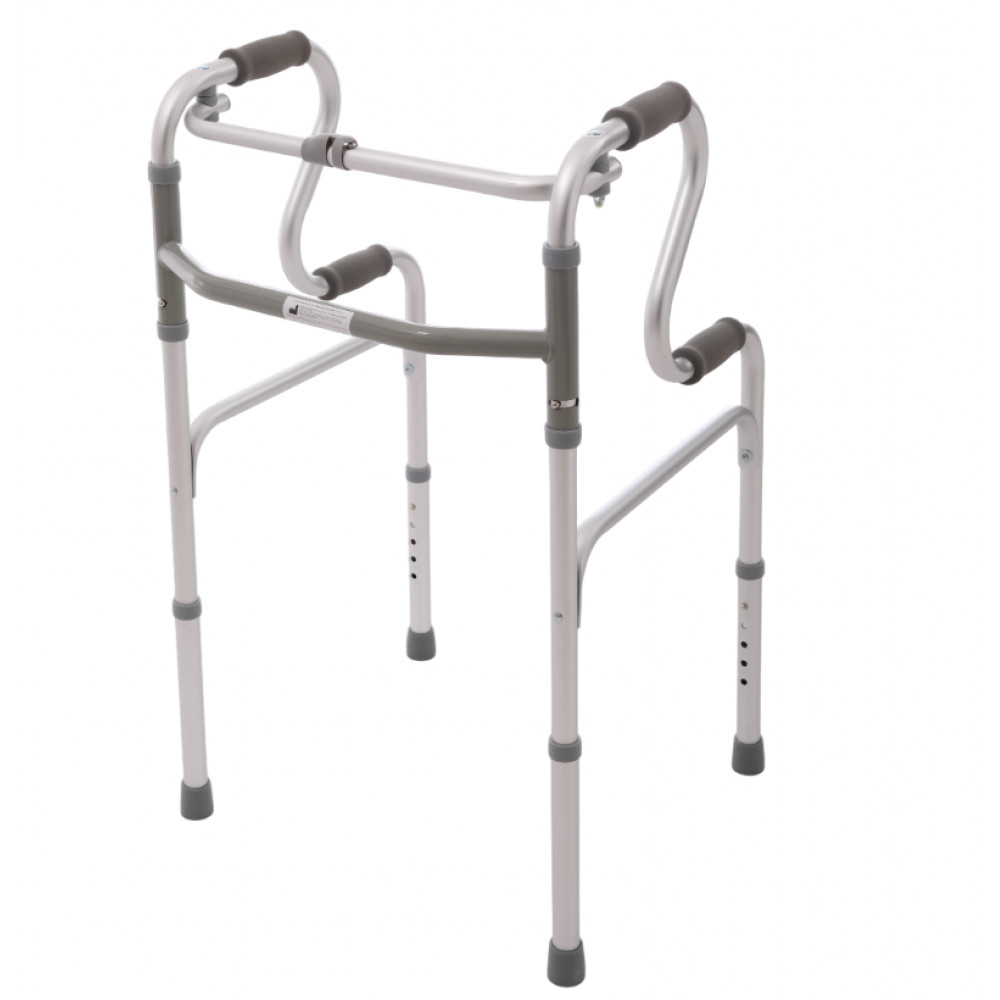
2. User height
The correct height of the walker affects comfort and safety. If the design is too low, the person will lean forward. If it is too high — the shoulders may rise, and the arms will quickly tire.
When leaning on the handles, the back should remain in a natural position, and the elbows — should be slightly bent. Therefore, it is important to check the height adjustment range of a particular model before purchasing.
3. Weight and maximum load
Each model is designed for a certain weight of the user. This is especially important to consider if a person relies heavily on the walker when standing up or walking.
You should not focus only on the appearance of the structure. The maximum permissible load should correspond to the weight of the user with a margin.
4. Wheels or supports?
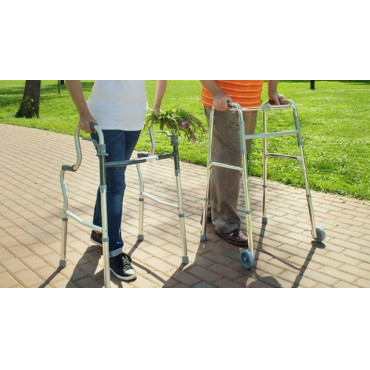
Walkers without wheels need to be lifted and moved forward. They provide reliable support and may be suitable for a person for whom it is important to control each step. Models with wheels are easier to move, since they do not need to be lifted completely. They may be more convenient for people with weak arms or insufficient strength.
For long walks, you should pay attention to a walking rollator. Such models usually have wheels, hand brakes, and some — a seat and a basket. This allows you to stop and rest during your walk.
5. Where will the walker be used?
For an apartment, compactness, low weight, and the ability to easily move between furniture are important. For the street, you need to consider the diameter of the wheels, the stability of the structure and the quality of the coating.
Before buying, you should determine where exactly the person will use the walker:
-
in the room and hallway;
-
in the entrance;
-
on the sidewalk and asphalt;
-
during short or long walks;
-
at home and on the street.
One model will not necessarily be equally convenient for all situations.
6. Weight and folding
If you need to carry a walker, transport it in a car, or store it in a small apartment, pay attention to its weight and folding mechanism.
Lightweight folding models are convenient to take with you. At the same time, a design that is too light may not be stable enough for a person who leans heavily on it. Therefore, it is important to find a balance between mobility and reliability.
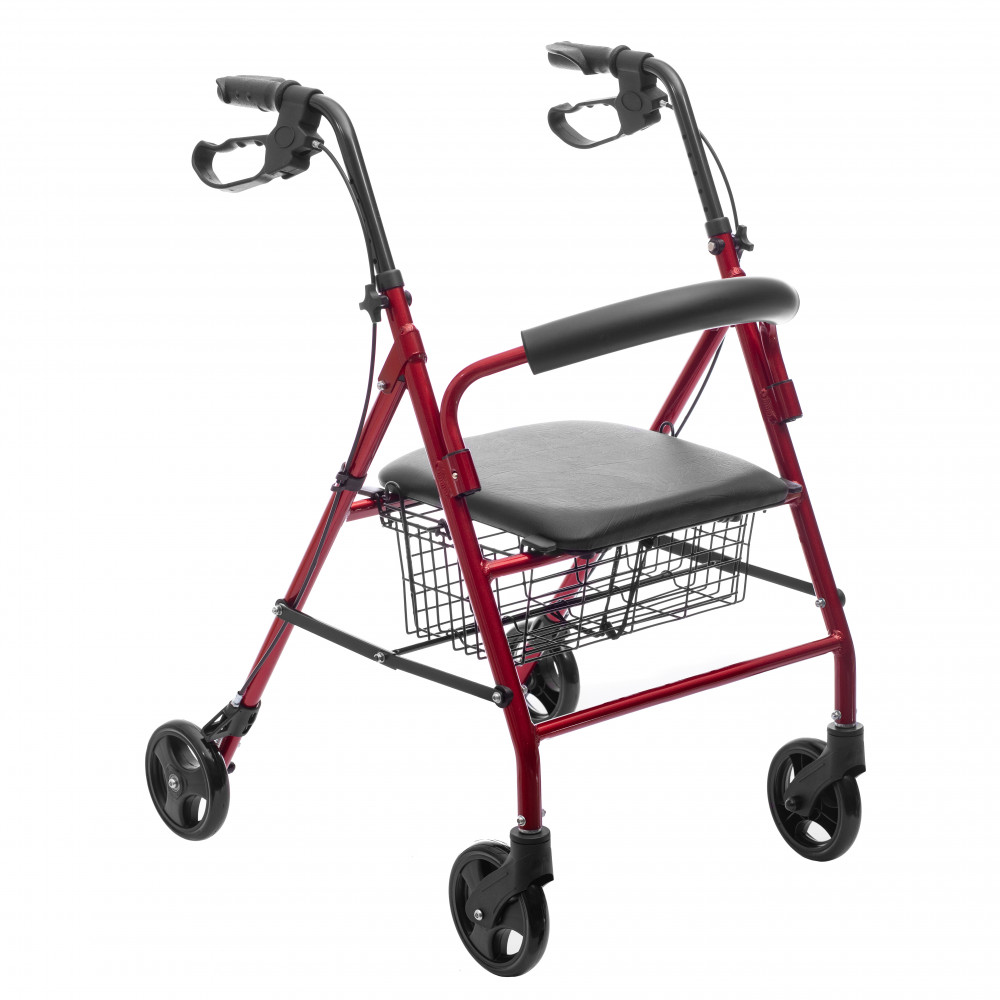
7. Additional elements
The handles should be comfortable and not slip in your hands. In models with wheels, reliable brakes are important, which a person can use independently.
For daily use, the following can also be useful:
-
a seat for rest;
-
a basket or bag for things;
-
rubber tips;
-
height adjustment;
-
folding mechanism locks.
How to buy a walker for adults?
The main guideline when choosing is not a person's age, but their physical capabilities. Walkers may be needed for a short period after surgery or injury, or they may become a permanent means of support while walking.
Before purchasing, determine where and how the person will use the product, whether they can lift the structure, how much they rely on their hands, and whether they need wheels. After surgery, joint replacement, or a serious injury, it is advisable to coordinate the choice of model with a doctor or physical therapist.
A properly selected walker should make movement more controlled, comfortable, and safe. Therefore, it is worth evaluating not only the inu and appearance, but also how well the model meets the specific needs of the user.