As people age, even routine daily activities become more difficult and require greater effort. Moving around the home, going for a walk, or visiting a doctor can become challenging due to muscle weakness, balance issues, or joint conditions. In such situations, it is important to help elderly parents maintain their mobility and self-confidence. A practical solution is the use of a walking aid—such as a walker—which provides additional support while moving.
The MED1 online medical equipment store offers a range of rehabilitation and care products, including models designed for seniors who require support to get around. Here are 5 reasons to consider purchasing a walker for parents who are finding it increasingly difficult to move about.
1. Greater Safety While Walking
With age, the risk of falls may increase due to impaired balance, reduced muscle strength, vision problems, or the lingering effects of past illnesses. Dizziness or unsteadiness—even after just a few steps—can sometimes lead a person to avoid unnecessary movement and spend more time sitting.
Walkers for adults provide additional points of support, help maintain balance, and make movement more controlled. They can make it easier for an older person to get out of bed, move around a room, or cover short distances.
.jpg)
Key benefits of using a walker in old age:
- additional support while walking;
- better control over movement and body positioning;
- greater confidence when moving around the home;
- a reduced risk of falling, provided the device is used correctly.
It is important to remember that a walker does not guarantee protection against falls. For safety, it is essential to adjust the device to the correct height, learn how to use it properly, and clear walkways of rugs, cords, and other obstacles.
2. Maintaining Independence in Daily Life
For many older adults, the ability to perform routine tasks independently is of great importance. Constantly needing to ask for help can lead to frustration, anxiety, or a sense of dependence on loved ones.
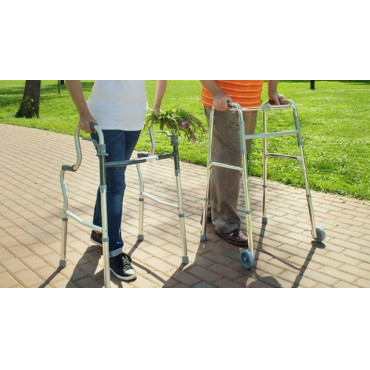
Walkers can help restore a degree of independence. Depending on an individual's physical condition, they can be used to reach the bathroom, move around the house, or even go for a walk in the park.
If you are planning to purchase a walker for your parents, focus primarily on their specific needs and physical capabilities.
3. Support During Recovery from Illness or Injury
Following surgery, fractures, a stroke, or a prolonged period of bed rest, it may be difficult for a person to immediately return to their usual level of activity. Muscles weaken, endurance decreases, and every step requires extra attention.
During rehabilitation, a walker can serve as an essential aid for gradually regaining the ability to walk. It provides support and helps control movement while following the recommendations of a doctor or physical therapist.

4. More Opportunities for Walks and Socializing
Limited mobility often leads to a person leaving the house less frequently, interacting less with friends, and gradually giving up familiar activities. This can negatively affect their emotional state and overall well-being.
A walker can make it easier for an elderly person to go out into the yard, take short walks near their home, or visit loved ones. The feasibility of such outings depends on their health status, the type of walker used, and the availability of a safe route.
When choosing a walker for outdoor use, consider the weight of the device, whether it is foldable, the presence of wheels and brakes, and the condition of sidewalks or other surfaces. If your parents struggle to navigate uneven ground, stairs, or curbs, they may need to be accompanied by someone else.
5. Peace of Mind and Confidence in Movement
When elderly parents live alone or are left home by themselves, their adult children may constantly worry about whether they might fall while walking to the kitchen or the bathroom. A walking aid does not eliminate all risks, but if chosen correctly, it can make moving around feel more secure.
What should you consider when choosing a walker for elderly parents?
Before placing an order, assess the physical capabilities of the intended user and the environment in which the device will be used. Keep the following features in mind when making your choice:
- Height of the frame. The handles should be positioned at a comfortable level so that the user does not have to lean forward excessively or hunch their shoulders.
- Type of walker. Stationary models, wheeled versions, and rollators each have distinct characteristics. The right choice depends on the user's balance, arm strength, and coordination.
- Maximum weight capacity. The user's weight must fall within the limits specified for the device.
- Weight and foldability. A lightweight, foldable design is easier to store and transport when necessary.
- Handles and brakes. These should be easy to grip and operate, tailored to the user's physical abilities.
- Usage environment. For use inside an apartment ...compactness and maneuverability are important, while for outdoor walks, stability and suitability for the terrain are key.
If there are significant balance issues, or if a person is recovering from an injury, it is advisable to consult a doctor or physical therapist before making a purchase.
In the MED1 catalog, you can find mobility aids tailored to individual needs. Do not delay in ensuring the comfort and safety of your loved ones: the right walker can help elderly parents maintain their mobility, independence, and familiar lifestyle.