Cerebral palsy (CP) is a group of neurological disorders that primarily affect movement, coordination, muscle tone, and a person's ability to control body position. The degree of manifestation can vary significantly: one person with CP can walk independently but quickly get tired, another needs a cane or walker, and in more severe cases, a person may constantly use a wheelchair.
That is why there is no universal model that will suit everyone. A wheelchair for CP should correspond not only to the age and weight of the user, but also to the characteristics of his motor abilities, muscle tone, posture, and need for support.
A correctly selected chair helps maintain the physiological position of the body, reduces the load during movement, and facilitates daily care. Let's consider 7 main criteria that you should pay attention to before buying.
1. Degree of motor impairment and independence of the person
First of all, you need to assess how much the person is able to move around and control the chair independently. For a user who has sufficient strength in his hands and good control of movements, an active or light chair that he can control independently may be suitable. If coordination of movements is limited, a model that is controlled by an accompanying person is needed.
When choosing, it is important to consider:
- arm and leg strength;
- ability to hold the head;
- trunk control;
- balance in a sitting position;
- nature of muscle tone;
- ability to independently transfer from bed to chair;
- level of endurance;
- need for constant or periodic use of a wheelchair.
For example, if a person can walk short distances but gets tired quickly, it is not necessary to use a wheelchair constantly. For such situations, walkers for people with musculoskeletal disorders can be useful — they help maintain a certain level of independence during movement.
If a person cannot move safely without assistance, a wheelchair becomes the main means of mobility.
2. Correct size and fit
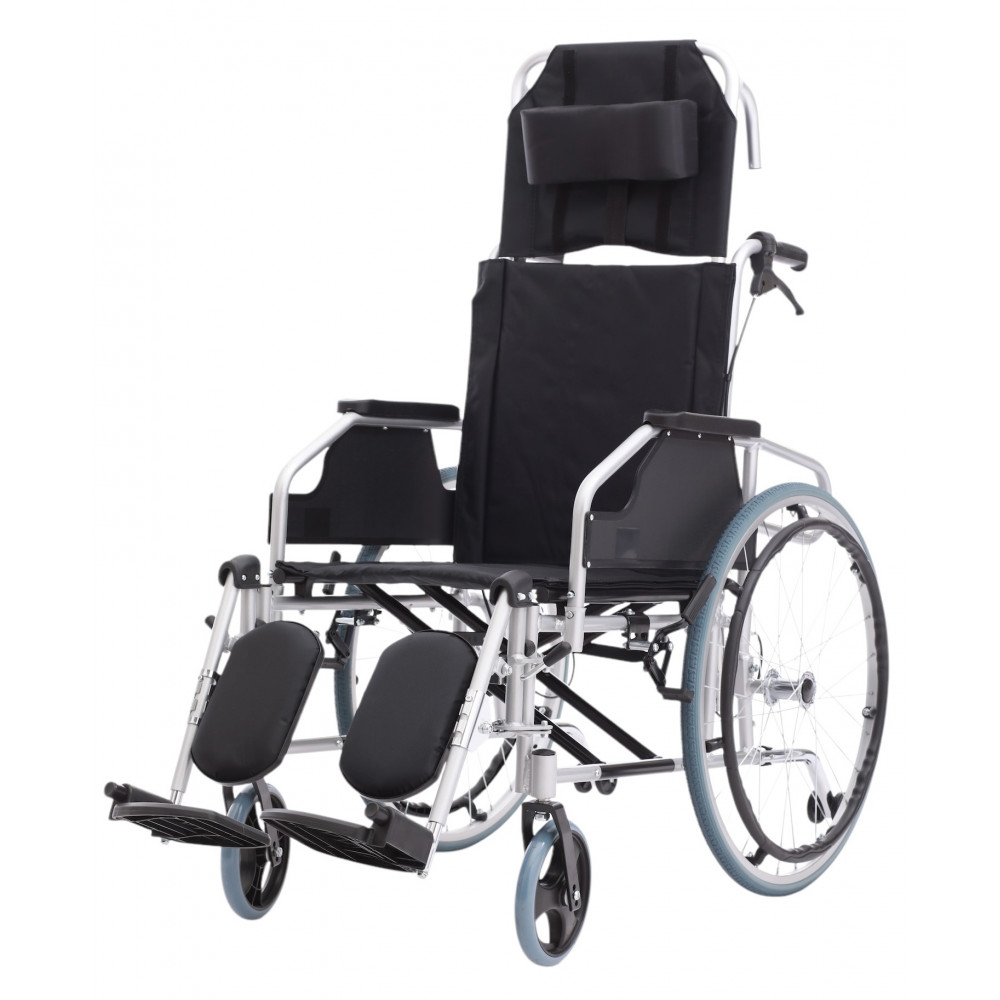 One of the most important criteria is the correspondence of the chair's dimensions to the user's body parameters. Incorrect seating can lead to discomfort, poor posture, additional muscle tension, and excessive pressure on certain parts of the body.
This is especially important when choosing a wheelchair for children with cerebral palsy, because the child grows and his needs change.
You need to pay attention to:
- seat width;
- seat depth;
- backrest height;
- armrest height;
- footrest position;
- distance between the seat and the footrests;
- overall height and length of the chair.
The seat should not be too narrow so as not to create pressure on the hips. At the same time, a seat that is too wide will not provide sufficient lateral support. The depth of the seat also matters: the edge of the seat should not press on the area under the knees, and the back should fit snugly against the backrest.
For children, it is advisable to choose models with the possibility of adjustment that can be adapted to the child's growth.
3. Support for the head, back and pelvis
With cerebral palsy, muscle tone and posture control disorders often occur. Because of this, a person may involuntarily lean forward or sideways, fall to one side, or have difficulty holding their head.
Therefore, a wheelchair for patients with cerebral palsy must provide a stable and safe fit.
Depending on the needs, the following may be required:
- anatomical backrest;
- lateral trunk supports;
- headrest;
- special pelvic supports;
- adjustable armrests;
- leg restraints;
- belts that help maintain the correct body position.
It is especially important to properly fix the pelvis. If it constantly shifts forward or sideways, this can affect the position of the entire spine. However, fixation elements should not be installed just "just in case". Their design and necessity should be determined taking into account the specific needs of the person, preferably together with a doctor or physical rehabilitation specialist.
4. Adjusting the body position
For a person who spends many hours in a chair, the ability to change the body position is a very important function. In simple models, the backrest may not be adjustable. However, for a person with severe motor disorders, it is advisable to consider models with adjustable backrest angle, footrest position, armrest height, seat tilt, and headrest position.
The position change function helps to adapt the chair to different situations: feeding, resting, communicating, moving, or staying in one position for a long time. This is especially important for people with severe forms of cerebral palsy,who cannot change their position independently.
5. Protection against bedsores and proper load distribution
If a person spends most of the day sitting or lying down, it is necessary to pay special attention to the prevention of bedsores.
Decubitus ulcers occur due to prolonged pressure on certain areas of the body, especially in places where bone protrusions are located close to the surface of the skin. The risk increases if a person cannot change position independently. Therefore, a wheelchair for patients with cerebral palsy should have a high-quality seat that provides the most even load distribution. If necessary, special anti-bedsore pillows are used.
The sleeping place is no less important in prevention. If a person spends a lot of time in bed, it is worth considering an anti-bedsore mattress for a person with limited mobility. It can be part of a comprehensive care regimen along with regular body positioning and skin monitoring.
It should be remembered: no mattress or pillow can replace regular care.
6. Safety and reliability of the design
Safety should be one of the main selection criteria. The chair must be stable, durable and suitable for the user's weight.
Before buying, you should check:
- maximum permissible load;
- reliability of the brakes;
- strength of the frame;
- quality of the wheels;
- availability of seat belts if necessary;
- reliability of the footrests;
- stability of the structure during boarding and transfer.
For children, it is especially important that all elements are securely fixed and do not pose a risk of injury. If the chair is planned to be used outdoors, the type of wheels and their cross-country ability should be taken into account. Moving on uneven asphalt, tiles or dirt paths requires different characteristics than for use exclusively indoors.
7. Weight, mobility and how to use

Another important criterion is where and how the chair will be used. If it needs to be folded and transported by car every day, a model that is too heavy may become inconvenient for the family. If the chair will be used mainly at home or for walks, stability, comfort and adjustability may be more important.
Before buying, it is worth determining:
For the home. Compactness, turning radius and the ability to drive through doorways are important.
For the street. Reliable wheels, good shock absorption and a stable frame are required.
For the car. The advantage will be a complex design and low weight.
For a long stay in the chair. Ergonomics, body support, adjustment and prevention of excessive pressure come first.
Therefore, a wheelchair should not be chosen only by price or appearance. The chair — It is a means of daily mobility and support, on which a person's comfort largely depends.
Why does a person with cerebral palsy need special care?
Cervical convulsions are not one specific disease with the same symptoms for everyone. It is a group of disorders of brain development and function that occur early in life and affect movement and posture. In addition to motor disorders, some people may experience problems with coordination, speech, swallowing, vision, self-care or muscle control. That is why care should be comprehensive.
It is important not only to provide a person with a wheelchair, but also to take care of a comfortable place to sleep, safe movement, regular changes in body position, physical activity according to capabilities and prevention of complications.
For a person with limited mobility, an important element of the home environment can also be a medical bed for a person with disabilities. Adjusting the height and position of the backrest helps to make care more comfortable for both the user and the person caring for them.
Which wheelchair should I choose?
There is no clear answer, because the choice depends on the specific person. What is comfortable for an adult with mild motor disorders may be completely unsuitable for a child with severe spastic syndrome.
Before buying, it is advisable to assess not only the height and weight of the user, but also his functional capabilities. In more complex cases, it is better to select the optimal configuration with the participation of a doctor, physical therapist or occupational therapist.
You need to approach the choice especially carefully if it is a child. A wheelchair for children with cerebral palsy should take into account not only the current parameters, but also the possibility of further adjustment of the design as they grow.
A properly selected chair should not just transport a person from one place to another. Its task is to ensure the safest and most comfortable body position, maintain the user's independence and facilitate everyday life.
Choosing a mobility devicemobility in cerebral palsy — is an individual task in which several factors are important at once: the level of motor abilities, body size, head and trunk control, muscle condition, the need for additional fixation, the duration of stay in the chair and the conditions of its use. If you choose the right wheelchair for patients with cerebral palsy, it can become not just a means of transportation, but an important part of daily care and rehabilitation. And a comprehensive approach — from the correct seating in the chair to the organization of a safe sleeping place — helps to make the daily life of a person with cerebral palsy more comfortable and safer.